
AMH Test & Day 3 Hormones: Know Your Fertility Numbers
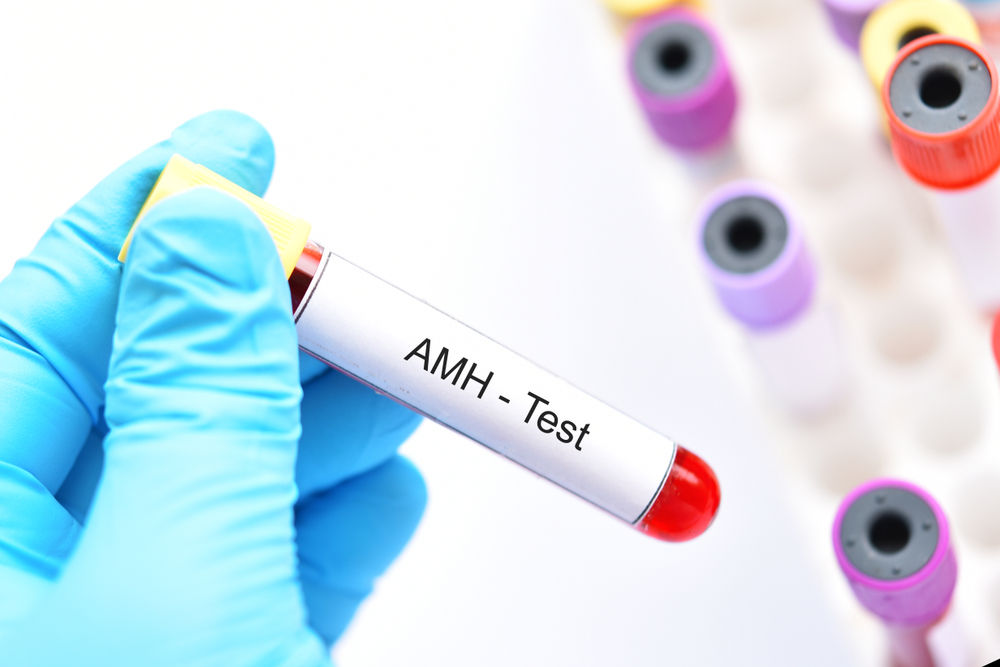
One of the critical components of a female fertility workup is testing hormone blood levels, including Anti-Mullerian hormone (AMH) and ‘Day 3’ blood tests – follicle-stimulating hormone (FSH), luteinizing hormone (LH), and estradiol (E2). ‘Day 3’ blood tests are typically drawn on the third day of your menstrual cycle in order to optimize their measurement. All of these hormones help your physician better understand your ovarian reserve, or the quantity and quality of eggs remaining in your ovaries. These hormones are also monitored during a treatment cycle and can help guide changes to treatment protocol.
What AMH Testing Measures
Although AMH is not considered part of 'Day 3’ hormones, it is still an important marker of your fertility status. AMH is produced by cells of growing follicles and indicates the quantity of developing eggs in your ovaries. AMH can be measured at any point of your menstrual cycle, not just on day 3, and does not require a sonogram to get an accurate reading, like antral basal follicle count. Levels of AMH increase until early adulthood and then slowly decrease with increasing age until becoming undetectable before menopause.
AMH levels can vary based on age and individual biology, but doctors often use the following age-based reference points to help assess ovarian reserve:
- Age 25: ~3.0 ng/mL
- Age 30: ~2.5 ng/mL
- Age 35: ~1.5 ng/mL
- Age 40: ~1.0 ng/mL
- Age 45: ~0.5 ng/mL
Your doctor will interpret these results in the context of your age, medical history, and other fertility tests to provide the clearest picture of your reproductive health.
What Day 3 Hormone Testing Reveals
FSH (Follicle Stimulating Hormone):
LH is another hormone secreted by your pituitary gland. LH levels tend to rise mid-cycle, prompting ovulation to occur within 24-36 hours. Higher than normal levels of LH may suggest ovarian failure, a pituitary disorder, or polycystic ovarian disease. Low levels of LH could indicate malnutrition, anorexia, stress, or, again, a pituitary disorder.
LH (Luteinizing Hormone):
LH is another hormone secreted by your pituitary gland. LH levels tend to rise mid-cycle, prompting ovulation to occur within 24-36 hours. Around day 3, LH levels are typically between 1.9 and 12.5 mIU/mL, though your doctor may assess how LH compares to FSH as well. Higher than normal levels of LH may suggest ovarian failure, a pituitary disorder, or polycystic ovarian disease. Low levels of LH could indicate malnutrition, anorexia, stress, or, again, a pituitary disorder.
E2 (Estradiol):
E2 is a form of estrogen that is primarily made in and released from your ovaries, adrenal cortex, and placenta. It is responsible for the growth of the breasts, external genitalia, uterus, fallopian tubes, and vagina. E2 prompts maturation of the follicles, release of the egg, and thickens the uterine lining for the egg to have an ideal environment in which to implant. On day 3, estradiol levels are generally considered normal between 25 and 75 pg/mL, with lower levels being more ideal for baseline testing. A high E2 would suppress FSH production.
Why Hormone Tests Aren’t the Whole Picture
Because a single test cannot give a completely accurate picture of your fertility status, your doctor should review the other components of a fertility workup, such as an ultrasound and physical and medical history, to determine your fertility status and whether you will require assisted reproductive technology, such as in vitro fertilization (IVF), to create your family. Using these other tests will give your doctor a complete picture of your reproductive health and the treatment that is best for your family-building goals. Furthermore, you should not make any conclusions about your hormone levels or fertility status without consulting your doctor. Your doctor is an expert in the field and can best explain your results.